
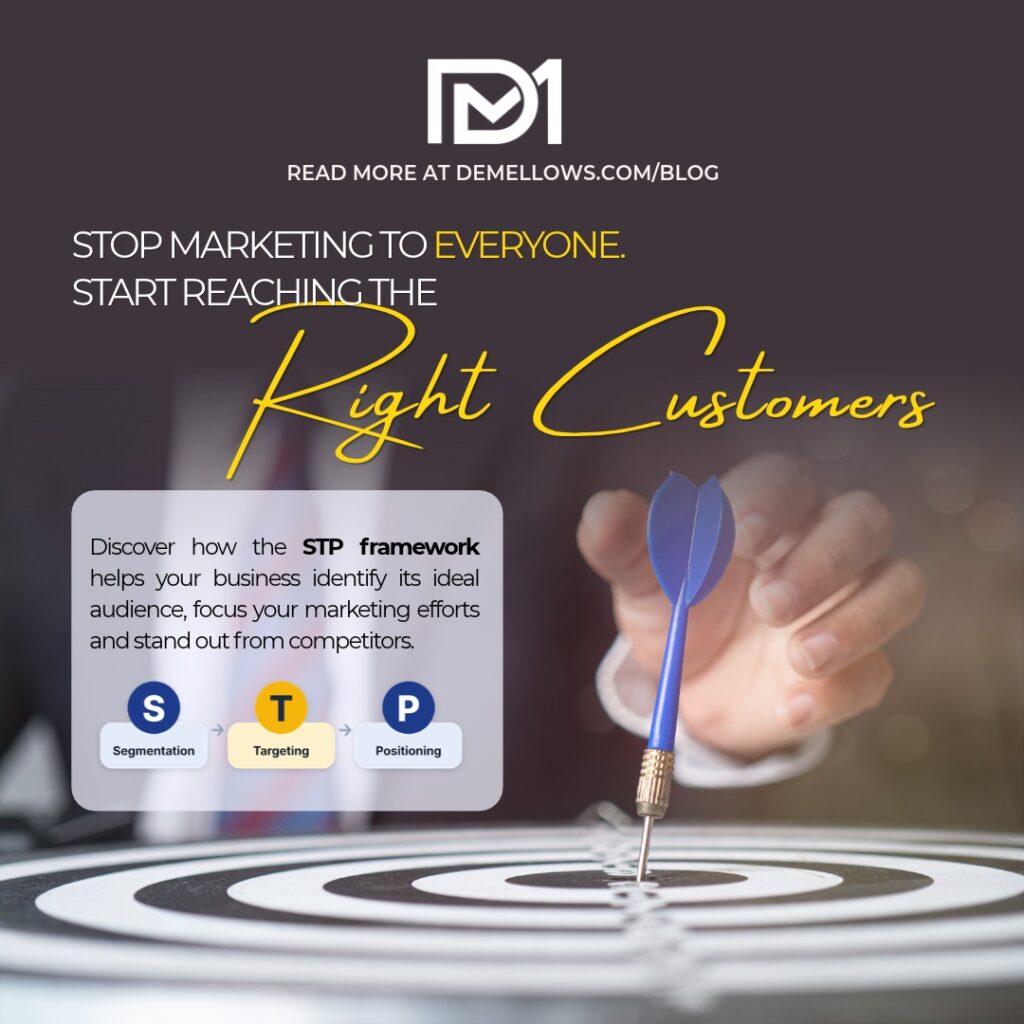
Many businesses invest time and money into marketing but struggle to see meaningful results. They post regularly on social media, run advertisements and update their websites, yet the enquiries they receive may not translate into sales.
One possible reason? Their marketing is trying to reach everyone.
When a business attempts to appeal to too broad an audience, its messaging can become generic. Potential customers may see the content, but they do not necessarily feel that the product or service is meant for them.
This is where the STP marketing framework comes in. STP stands for Segmentation, Targeting and Positioning. It helps businesses understand their market, identify the customers they want to reach and communicate why their offering is the right choice.
Let’s explore how SMEs can use this framework to build a more focused marketing strategy.
1. Segmentation: Understand the Different Types of Customers
The first step is to divide a broad market into smaller groups of customers who share similar characteristics, needs or behaviours.
Not every customer has the same priorities. For example, a digital marketing agency may serve:
- Start-ups looking to establish their online presence.
- Small businesses wanting to generate more enquiries.
- Established companies looking to improve marketing performance.
- Businesses expanding into new markets.
Although these businesses may need similar services, their challenges and expectations can differ.
Customer segmentation can be based on several factors:
Demographic: Age, income, occupation, business size or industry.
Geographic: Location, region or the markets a business operates in.
Psychographic: Interests, values, priorities and attitudes.
Behavioural: Purchasing habits, brand interactions and previous buying decisions.
For SMEs, the goal is not to create as many customer groups as possible. It is to identify meaningful differences that influence how the business should market its products or services.
Understanding these differences helps businesses move away from generic messaging and communicate more effectively with potential customers.
2. Targeting: Choose Which Customers to Focus On
Once the market has been segmented, the next step is deciding which groups are most relevant to the business. This is known as targeting.
It can be tempting to pursue every potential customer, especially for smaller businesses trying to grow. However, spreading marketing resources too thinly can make campaigns less effective.
Instead, businesses should evaluate each segment based on:
- Market potential: Is there sufficient demand for the product or service?
- Customer needs: Does the business offer a solution to their problems?
- Profitability: Can this segment generate sustainable revenue?
- Accessibility: Can the business reach these customers through its marketing channels?
- Competition: How difficult will it be to stand out?
For example, a digital marketing agency may decide to focus on established SMEs that already have a website but struggle to generate qualified leads. Rather than targeting every business owner, the agency can concentrate its marketing efforts on this particular audience. Its website content, social media posts and advertising campaigns can then address the challenges these businesses face. This makes marketing more focused and helps the business use its resources effectively.
3. Positioning: Give Customers a Reason to Choose You
The final step is positioning.
Positioning is how a business wants its target customers to perceive its brand compared with competitors. It answers an important question:
Why should customers choose your business instead of another provider?
Having a good product or service is not always enough. Customers need to understand what makes the business relevant to them and what value it offers. Consider a small business offering website development services. Instead of simply promoting itself as a company that builds websites, it could position itself as a website development partner for SMEs that want to turn website visitors into enquiries. This communicates a clearer benefit and speaks directly to a specific business need.
Effective positioning should consider three things:
- Your audience: Who are you trying to attract?
- Your value: What problem do you solve, and what benefits do customers receive?
- Your differentiation: What makes your offering different from competitors?
Once the positioning is clear, it should be reflected consistently across the business’s website, social media content, advertisements and other customer touchpoints.
Putting the STP Framework into Practice
Let’s use a hypothetical SME offering professional accounting services as an example.
| STP Stage | Example |
|---|---|
| Segmentation | Start-ups, freelancers and established SMEs |
| Targeting | SMEs that need ongoing accounting support |
| Positioning | A reliable accounting partner that helps SMEs manage their finances and stay organised |
With this strategy, the business has a clearer understanding of whom it wants to reach and how it should communicate its value.
Instead of publishing general posts about accounting services, it could create content addressing common financial management challenges faced by SMEs. It could also develop website pages explaining its services and how they address the needs of this audience. The result is a more consistent marketing approach, where the audience, message and offering work together.
Common STP Mistakes Businesses Should Avoid
Although the framework is straightforward, businesses can still make mistakes when applying it.
1. Targeting too broad an audience
Trying to appeal to everyone often leads to vague messaging. Identify the customer groups that are most relevant to your business goals.
2. Making assumptions about customers
Use customer feedback, market research and buying behaviour rather than assumptions to understand what your audience needs.
3. Ignoring competitors
Positioning requires an understanding of what other businesses offer. Without this, it can be difficult to communicate a meaningful point of difference.
4. Treating STP as a one-time exercise
Markets, customer expectations and business goals change. Review your segments, target audiences and positioning regularly to keep your marketing relevant.
Market Smarter by Reaching the Right Audience
Marketing success is not simply about reaching more people. It is about reaching the people most likely to need, value and choose what your business offers.
The STP framework gives businesses a structured way to do this. By understanding customer segments, selecting the right audience and establishing a clear market position, SMEs can develop more focused and meaningful marketing strategies.
At De Mellows, we believe effective marketing starts with understanding your business goals and the customers you want to reach. From digital strategy and content marketing to SEO and conversion-focused websites, the right approach can help turn marketing efforts into meaningful business opportunities.
Not sure if your marketing is reaching the right audience?
Get in touch with De Mellows for a complimentary discovery call. Let’s explore how a more focused marketing strategy can help your business grow.
Visit demellows.com to learn more.