
Every business dreams of creating content that spreads organically across social media. Whether it is a video, a customer story, or a marketing campaign, going viral can dramatically increase brand awareness without the cost of paid advertising. However, viral marketing is not simply a matter of luck. More often than not, there is a psychological reason why people choose to share certain content.

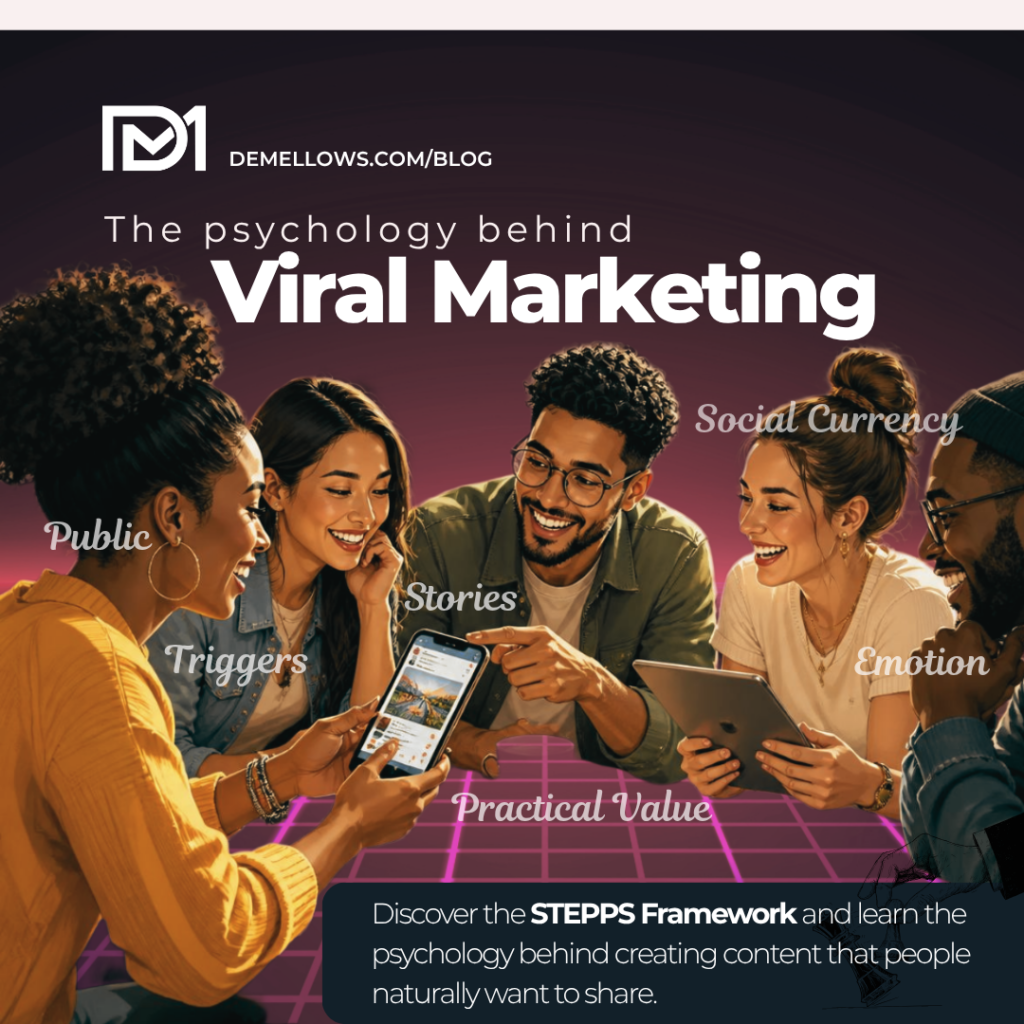
This is where the STEPPS Framework comes in. Developed by marketing professor Jonah Berger, the STEPPS Framework explains the key psychological triggers that make ideas, products, and content more likely to be talked about and shared. For small and medium sized enterprises (SMEs) in Singapore, understanding these principles can help create marketing that resonates with audiences and encourages word of mouth.
In this guide, we explore the six elements of the STEPPS Framework and how businesses can use them to create more engaging marketing campaigns.
What is the STEPPS Framework?
STEPPS is an acronym for six principles that influence why people share information:
- Social Currency
- Triggers
- Emotion
- Public
- Practical Value
- Stories
Rather than relying on expensive advertising, the framework focuses on understanding human behaviour. When content includes one or more of these elements, it becomes naturally more shareable.
For SMEs with limited marketing budgets, this presents an opportunity to increase visibility by creating content that people genuinely want to pass on.
- Social Currency: Make People Look Good
People enjoy sharing things that make them appear knowledgeable, helpful, or interesting. This is known as social currency. When someone shares your content, they are also expressing something about themselves.

Ask yourself:
- Does this content make my audience feel smart?
- Will sharing it help them stand out among their friends or colleagues?
- Does it provide exclusive or interesting information?
Example
Imagine a local café introducing a secret off menu drink available only to followers on Instagram. Customers are more likely to share it because discovering something exclusive makes them feel like insiders.
Similarly, businesses can share industry insights, unique statistics, or behind the scenes content that gives audiences something valuable to talk about.
- Triggers: Stay Top of Mind
Triggers are everyday reminders that prompt people to think about your brand.
The more frequently your audience encounters something that reminds them of your business, the more likely they are to remember and discuss it.
For example, a bakery may consistently post about weekend breakfast ideas every Friday morning. Over time, Fridays become associated with the brand.

Example
A local florist could create content around occasions such as Mother’s Day, Chinese New Year, Hari Raya, or Valentine’s Day. These annual events naturally remind customers about flowers, making the brand more memorable during purchasing periods.
Businesses should consider what regular events, habits, or seasons can become natural reminders for their products or services.
- Emotion: People Share What They Feel
One of the strongest drivers of sharing is emotion.
People rarely share content simply because it is informative. They share content because it makes them laugh, inspires them, surprises them, or even moves them emotionally.
Successful marketing often focuses on emotional experiences rather than product features.

Types of emotions that encourage sharing include:
- Inspiration
- Joy
- Surprise
- Humour
- Excitement
- Empathy
Example
A family owned business sharing the story of how it started from a small neighbourhood shop can create an emotional connection with customers who appreciate authenticity and perseverance.
The stronger the emotional response, the greater the likelihood that people will share the story with others.
- Public: Make It Easy to Notice
People naturally imitate what they see others doing.
When your product, campaign, or customer experience is highly visible, it encourages others to participate as well.
This principle explains why user generated content, branded packaging, and social media challenges can be so effective.

Example
A café with beautifully designed drinks or desserts encourages customers to take photos and post them online. Every shared photo becomes free publicity for the business.
Likewise, businesses can encourage customers to leave reviews, tag their brand on social media, or share their experiences using a branded hashtag.
When people can easily see others engaging with your brand, they are more likely to do the same.
- Practical Value: Give People Something Useful
People love sharing information that helps others.
Whether it is a useful tip, a money saving idea, or an educational guide, practical content often receives high engagement because it provides genuine value.

Ask yourself:
- Does this solve a common problem?
- Will someone benefit from reading this?
- Is it easy to understand and apply?
Example
A renovation company might share “5 Space Saving Ideas for Small Apartments,” while a financial consultancy could publish “Common Tax Filing Mistakes SMEs Should Avoid.”
Educational content builds trust while positioning your business as a knowledgeable industry expert.
- Stories: Wrap Your Message in a Narrative
Facts are easily forgotten, but stories stay with us.
Instead of simply promoting your products or services, tell stories that naturally incorporate your brand.
Stories create emotional engagement while making information easier to remember and share.

Example
Rather than saying a bakery sells customised cakes, tell the story of how one of your cakes became the centrepiece of a memorable birthday celebration.
People may forget the product details, but they are far more likely to remember and retell the story.
When your brand becomes part of the narrative, your marketing message spreads naturally.
Applying the STEPPS Framework to Your Marketing
One common misconception is that every campaign needs to include all six STEPPS principles.
In reality, even incorporating two or three elements can significantly improve engagement.
For example:
A short Instagram Reel could:
- Share a helpful business tip (Practical Value)
- Include an inspiring customer success story (Stories)
- End with a surprising statistic (Social Currency)
The key is to think beyond promoting your products. Instead, focus on creating content that people naturally want to talk about.
Why the STEPPS Framework Matters for Singapore SMEs
Small businesses often have limited marketing budgets, making it difficult to compete with larger brands through advertising alone.
The STEPPS Framework offers a more sustainable approach by encouraging businesses to create content that spreads through genuine customer engagement and word of mouth.

For SMEs in Singapore, this means:
- Increasing brand awareness without relying solely on paid advertising
- Building stronger relationships with customers
- Creating more memorable and engaging content
- Encouraging organic sharing across social media platforms
- Establishing credibility and trust within the community
As digital platforms continue to evolve, businesses that understand why people share content will have a significant competitive advantage.
Conclusion
Going viral is not about chasing trends or hoping for luck. It is about understanding what motivates people to engage, remember, and share.
The STEPPS Framework provides a practical blueprint for creating marketing that captures attention and encourages meaningful conversations. By incorporating social currency, triggers, emotion, public visibility, practical value, and storytelling into your content, your business can increase its reach while building stronger connections with its audience.
For SMEs in Singapore, the most effective marketing is not always the one with the biggest budget. Often, it is the one that understands people best.
💡 Pro Tip: Before publishing your next piece of content, ask yourself one simple question: “Why would someone want to share this?” If you can answer that clearly using one or more of the STEPPS principles, you are already on your way to creating more impactful marketing.