
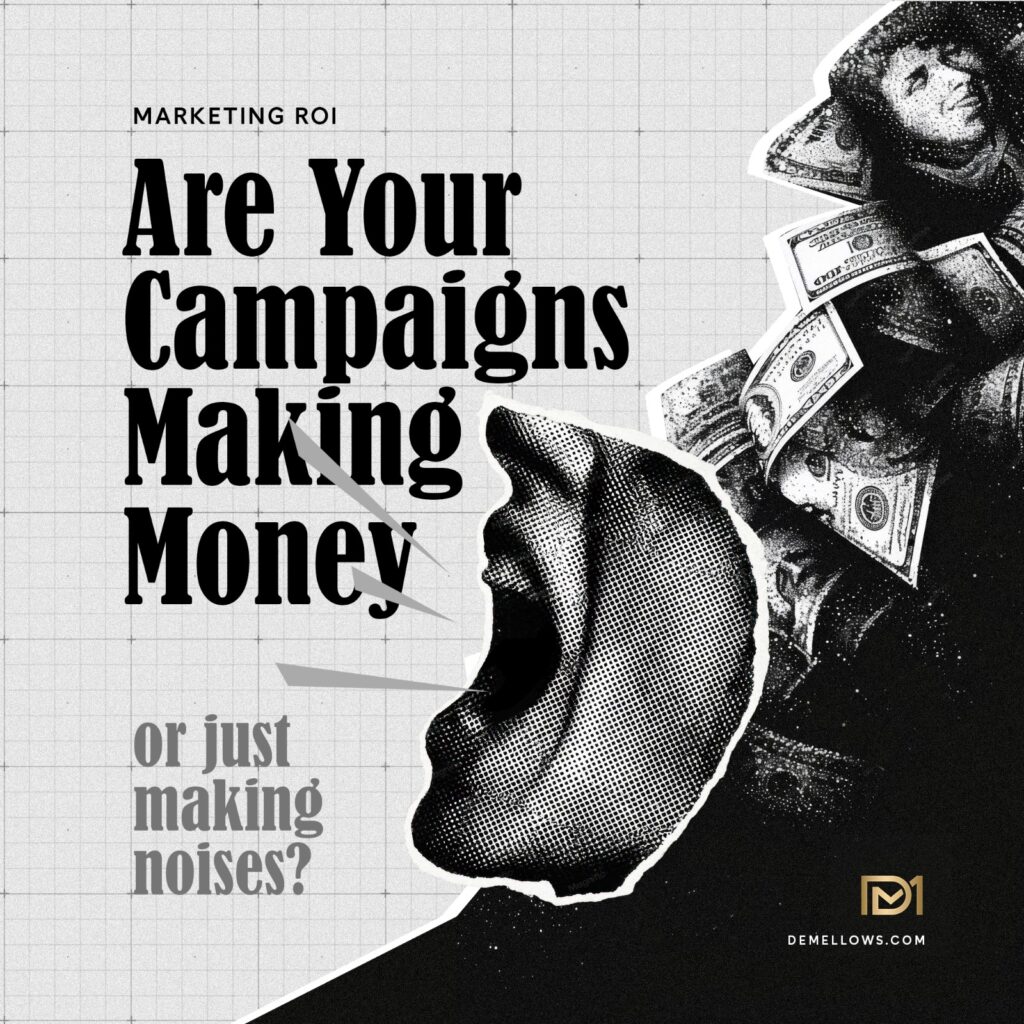
Likes, clicks, website visits, and social media followers can make a marketing campaign look successful. But here’s the real question: Is your marketing actually contributing to your business growth, or is it simply creating activity without results?
In today’s competitive digital landscape, businesses invest in various marketing channels, from social media and paid advertising to SEO, email marketing, and content creation. While each channel serves a purpose, spending money on marketing without understanding its impact can quickly become an expensive guessing game.
What Is Marketing ROI?
Marketing ROI measures the financial return generated by your marketing activities in relation to the cost of those activities.
The basic formula is:
Marketing ROI = (Revenue Generated − Marketing Cost) ÷ Marketing Cost × 100%
For example, if you spend $5,000 on a marketing campaign and generate $15,000 in attributable revenue, your marketing ROI is 200%.
That sounds promising, right?
However, revenue doesn’t automatically translate into profit. You still need to account for other business expenses, such as product costs, fulfilment, and operating overheads, to understand your actual profitability.
The point isn’t just to generate revenue. It’s to understand whether your marketing investment makes financial sense for your business.
Stop Chasing Vanity Metrics
One of the biggest mistakes businesses make is judging marketing performance based on numbers that look impressive but don’t necessarily contribute to their goals.
A social media post might receive thousands of likes, while a paid advertisement generates hundreds of clicks. But if neither leads to meaningful enquiries, sales, or customer relationships, what have these activities really achieved?
This doesn’t mean likes, impressions, and clicks are useless. They can help you understand brand awareness and audience engagement. The problem arises when these metrics become the main measure of success.
Consider two campaigns. Campaign A generates 10,000 website visits but only five enquiries. Campaign B attracts 2,000 visitors and generates 40 enquiries.
Although Campaign A receives more traffic, Campaign B may be doing a better job of attracting people who are genuinely interested in the business.
The goal isn’t simply to attract attention. It’s to turn that attention into meaningful business results.
4 Marketing Metrics Every Business Should Track
To understand whether your campaigns are working, start by looking at the numbers that connect your marketing activities to business outcomes.
1. Cost Per Lead (CPL)
How much are you spending to generate an enquiry?
If you spend $1,000 on a campaign and receive 50 leads, your cost per lead is $20.
But cheaper leads aren’t always better. A campaign generating fewer, more qualified enquiries could deliver greater value than one attracting large numbers of people who are unlikely to become customers.
Look at both the cost and quality of your leads before deciding whether a campaign is performing well.
2. Conversion Rate
Getting people to click on your advertisement or visit your website is only half the job. What matters is what they do next.
Your conversion rate measures the percentage of people who complete a desired action, such as submitting an enquiry, booking a consultation, or making a purchase.
If 500 people visit your landing page and 25 submit an enquiry, your conversion rate is 5%.
If your traffic is healthy but conversions are low, it may be time to review your messaging, landing page, offer, or call to action before spending more on advertising.
3. Customer Acquisition Cost (CAC)
Customer acquisition cost tells you how much it costs to acquire a new customer.
For example, if your marketing and sales activities cost $3,000 and bring in 15 new customers, your acquisition cost is $200 per customer.
Whether this is sustainable depends on your pricing, profit margins, and how much value each customer brings to your business over time.
Understanding your CAC helps you determine whether your current marketing strategy is financially viable.
4. Return on Ad Spend (ROAS)
If you’re running paid advertisements, ROAS helps you understand how much revenue your advertising generates for every dollar spent.
For example, spending $2,000 on ads and generating $8,000 in attributable revenue gives you a ROAS of 4x.
However, a high ROAS doesn’t necessarily mean your campaign is profitable. You still need to consider production costs, agency fees, product costs, and other expenses.
Looking at these metrics together gives you a more complete picture of your marketing performance.
Why Tracking Your Results Matters
Imagine a potential customer discovers your business through Google, reads a blog post, follows you on social media, and eventually clicks on an advertisement before making an enquiry.
Which marketing channel deserves the credit?
The truth is that several touchpoints may have contributed to that decision. If you only measure the final click, you might overlook the role your earlier marketing efforts played in building awareness and trust.
This is why proper tracking matters.
Tools such as Google Analytics, campaign tracking links, and customer relationship management (CRM) systems can help you understand where enquiries originate and how they progress towards a sale.
You may not always be able to attribute every sale perfectly, but having reliable data is far better than making decisions based on assumptions.
How Can You Improve Your Marketing ROI?
Before increasing your marketing budget, take a closer look at what you’re already doing.
- Set clear objectives. Know what each campaign is supposed to achieve. Brand awareness, lead generation, and sales require different approaches and success metrics.
- Understand your audience. Make sure your messaging speaks to the people most likely to need your products or services. Reaching the right audience is often more valuable than reaching a larger one.
- Review your conversion process. If people are clicking but not enquiring, investigate why. Your website, landing page, offer, or follow-up process could be creating unnecessary friction.
- Invest in what works. Review campaign performance regularly and allocate your budget based on evidence. Don’t continue spending simply because a campaign looks good on paper.
- Be patient, but stay accountable. Some campaigns generate immediate enquiries, while others, particularly SEO and content marketing, take longer to deliver results. Give each activity a reasonable evaluation period, but make sure you’re measuring progress against clear objectives.
Improving ROI isn’t always about spending more. Sometimes, it’s about making better use of the budget you already have.
Make Your Marketing Work for Your Business
Marketing should do more than keep your business visible. It should support your business objectives, attract the right customers, and contribute to sustainable growth.
That doesn’t mean every campaign must generate an immediate sale. Building awareness, establishing credibility, and nurturing potential customers all have a role to play. What matters is understanding what each activity is intended to achieve and whether it’s delivering value over time.
At De Mellows, we believe effective marketing starts with a clear strategy, a good understanding of your audience, and a focus on meaningful results.
Because at the end of the day, it’s not about how much noise your marketing makes. It’s about whether that marketing makes a difference to your business.
Ready to take a closer look at your marketing performance? Get in touch with De Mellows to explore how a more strategic approach can help you make better marketing decisions and work towards measurable business growth.