
For many small business owners in Singapore, growth is often the ultimate goal. Whether you run a retail shop, café, consultancy, e-commerce store, or service-based business, the challenge remains the same: How do you grow sustainably without taking unnecessary risks?

One of the most widely used strategic planning tools for business growth is the Ansoff Matrix. Developed by Igor Ansoff in 1957, this simple framework helps businesses identify growth opportunities by considering two factors: products and markets.
What Is the Ansoff Matrix?
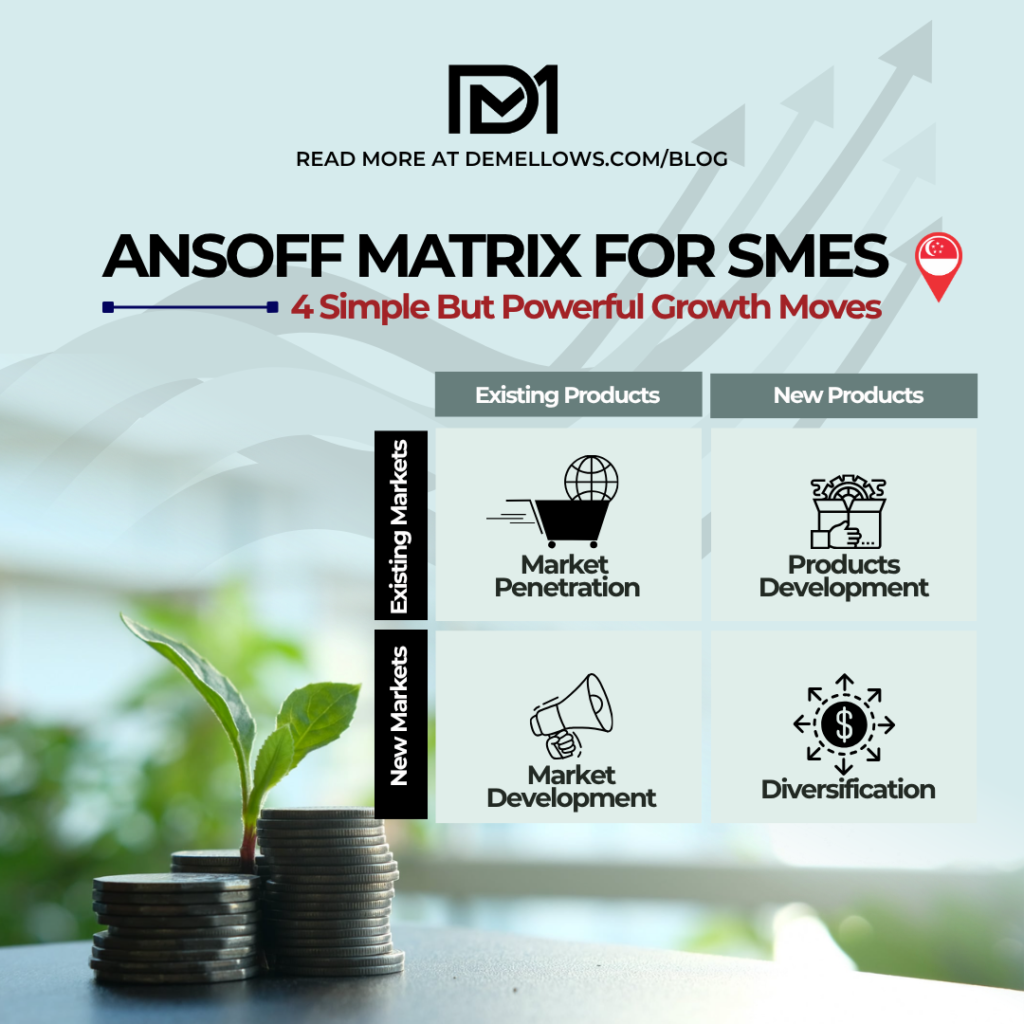
The Ansoff Matrix is a strategic framework that outlines four growth strategies based on whether a business focuses on existing or new products and existing or new markets.
The four strategies are:
- Market Penetration
- Market Development
- Product Development
- Diversification
Each strategy carries a different level of risk and requires different resources and capabilities.
For SMEs, understanding these options can help business owners make more informed decisions rather than relying on guesswork or following competitors blindly.
1. Market Penetration
Market penetration focuses on increasing sales of existing products or services to your current market. This is generally considered the lowest-risk growth strategy because both the product and customer base are already familiar.

How Singapore SMEs Can Apply This
Many SMEs overlook the value of their existing customers while focusing heavily on acquiring new ones. However, retaining and encouraging repeat purchases often costs significantly less than attracting new customers.

Examples include:
- Introducing loyalty programmes
- Offering bundle deals
- Running targeted promotions
- Increasing customer engagement through social media
- Improving customer service and retention
For example, a café in Singapore might introduce a digital rewards programme that offers a free drink after every ten purchases. A local beauty salon could offer referral incentives to existing customers.
Why It Works
Singapore’s highly connected digital environment makes it easier than ever to stay engaged with customers through email marketing, WhatsApp, social media, and loyalty apps.
For many SMEs, market penetration represents the quickest route to increased revenue.
2. Market Development
Market development involves taking existing products or services and introducing them to new markets.This could mean targeting different customer segments, entering new geographic areas, or expanding through digital channels.

How Singapore SMEs Can Apply This
Singapore’s domestic market is relatively small. As a result, many businesses eventually face growth limitations if they rely solely on local demand.
Common market development strategies include:
- Expanding into Malaysia, Indonesia, or other ASEAN markets
- Selling through regional e-commerce platforms
- Targeting corporate clients instead of individual consumers
- Entering new demographic segments
For instance, a local bakery that primarily serves walk-in customers may begin supplying pastries to offices, hotels, or corporate events. Similarly, a Singapore-based clothing brand might expand into neighbouring countries through online marketplaces.
Why It Works
Singapore serves as a regional hub, providing businesses with excellent infrastructure, logistics capabilities, and access to Southeast Asian markets.
For SMEs looking to scale beyond local limitations, market development can unlock substantial growth opportunities.
3. Product Development
Product development focuses on offering new products or services to an existing customer base. This strategy works particularly well when a business has already established strong customer relationships and brand trust.

How Singapore SMEs Can Apply This
Businesses often have valuable insights into what their customers want next. By listening to customer feedback and observing purchasing behaviour, SMEs can identify opportunities to expand their offerings.
Examples include:
- A tuition centre introducing online learning programmes
- A gym adding nutrition coaching services
- A café launching bottled beverages for retail sale
- A digital agency offering additional marketing services
For example, a Singapore fitness studio might start offering personalised meal plans and wellness consultations alongside existing training services.
Why It Works
Existing customers are generally more receptive to purchasing additional products from brands they already trust.
Rather than investing heavily in acquiring new customers, businesses can increase customer lifetime value by offering complementary solutions.
4. Diversification
Diversification is the most ambitious and highest-risk growth strategy. It involves introducing new products to entirely new markets. Since both the product and market are unfamiliar, businesses face greater uncertainty compared to the other three strategies.

How Singapore SMEs Can Apply This
Diversification may involve:
- Launching a new business line
- Entering a different industry
- Acquiring another business
- Developing innovative products for new customer groups
For example, a logistics company might develop a software platform for supply chain management. A retail business could launch a separate e-commerce brand targeting a completely different audience.
Why It Works
Although riskier, diversification can create new revenue streams and reduce dependence on a single market or product category.
For businesses facing industry disruption or changing consumer behaviour, diversification can provide long-term resilience.
Which Growth Strategy Should Singapore SMEs Choose?
The right strategy depends on the business’s current position, resources, and objectives.
In many cases, SMEs should focus on lower-risk growth opportunities before pursuing more complex strategies.
A practical approach may look like this:
- Start with Market Penetration
Maximise revenue from existing customers and strengthen customer loyalty.
- Move into Market Development
Explore new customer segments or regional opportunities once local growth stabilises.
- Invest in Product Development
Expand your product range based on customer demand and market feedback.
- Consider Diversification Carefully
Pursue diversification only when your core business is stable and capable of supporting additional ventures.
Final Thoughts
Rather than asking, “How do I grow my business?” the Ansoff Matrix encourages a more strategic question:
“Should I sell more to existing customers, find new customers, create new products, or enter entirely new markets?”

Growth does not always require a complete business overhaul. Sometimes, the most effective strategy is simply finding ways to better serve existing customers or reach new audiences with what you already do well.
The Ansoff Matrix offers a practical and proven framework for identifying those opportunities. Whether you’re running a neighbourhood café, an online store, a consultancy, or a growing SME, understanding these four growth strategies can help you chart a clearer path toward long-term success.
The key is not choosing the most ambitious option. It is choosing the growth strategy that best matches your business’s current stage and capabilities.