
In Singapore’s fast-moving business landscape, building a strong brand is no longer just about having a good logo or a catchy tagline. Whether you are a startup, SME, service provider, or established company, your brand needs clarity, positioning, and direction to stand out in a highly competitive market.

One of the simplest yet most effective tools for understanding your business and improving your brand strategy is the SWOT analysis.
Many businesses hear the term during workshops or business planning sessions, but few actually use it properly to guide branding decisions. The good news? SWOT analysis does not need to be complicated.
When done correctly, it becomes a practical framework that helps businesses make smarter branding decisions, identify growth opportunities, and strengthen market positioning.
What Is a SWOT Analysis?
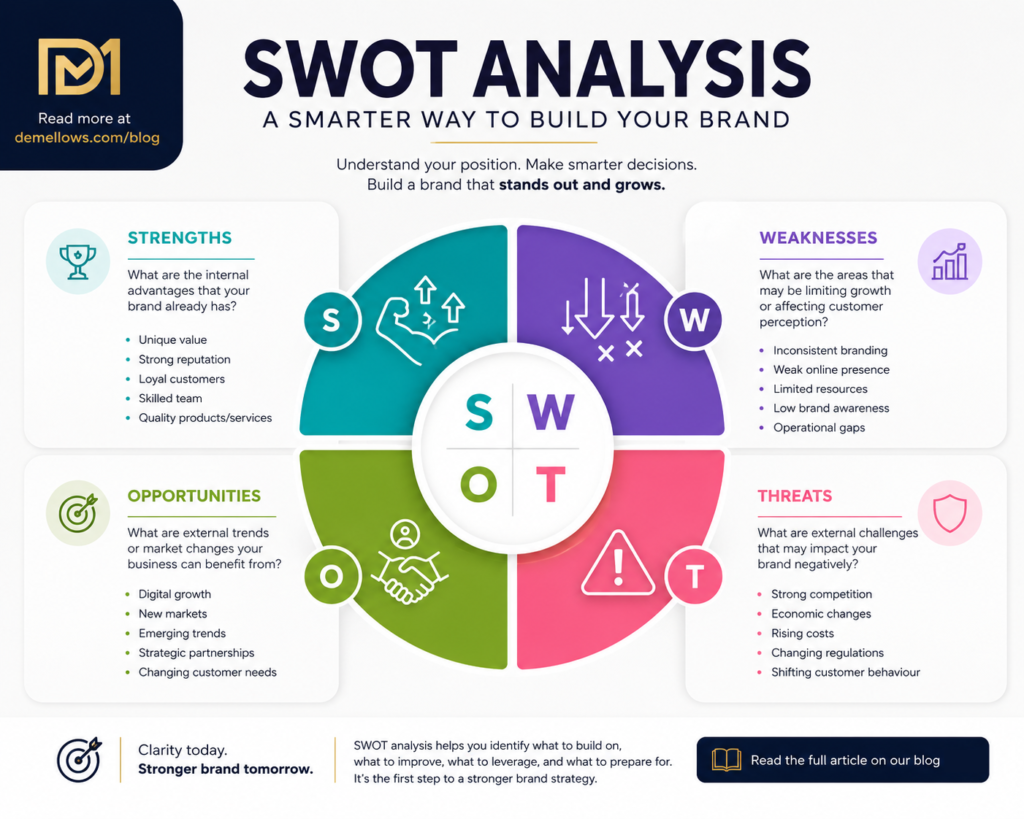
SWOT stands for:
- Strengths
- Weaknesses
- Opportunities
- Threats
It is a strategic planning tool used to evaluate both internal and external factors that affect a business.

In branding, SWOT analysis helps answer important questions such as:
- What makes our brand different?
- Why do customers choose us?
- What gaps are hurting our growth?
- What market trends can we leverage?
- What competitors or industry shifts should we prepare for?
Instead of relying on assumptions, a SWOT analysis gives businesses a clearer picture of where they stand and where they should go next.
Strengths: What Gives Your Brand an Advantage?
Strengths are the things your business already does well.

Ask yourself:
- What do customers consistently praise us for?
- What do we do better than competitors?
- Why do clients return to us?
Your strengths form the foundation of your brand messaging.
This could include:
- Strong customer service
- Good reputation
- Fast response times
- Skilled team
- Loyal customers
- Strong social media presence
In Singapore, customers value reliability, professionalism, and responsiveness. If these are your strengths, your branding should communicate them clearly.
Your strengths become the foundation of your brand identity and messaging.
Weaknesses: What Needs Improvement?
Weaknesses are areas that may be limiting growth or affecting customer perception.

Examples include:
- Inconsistent branding
- Weak online presence
- Outdated website
- Low brand awareness
- Unclear messaging
Many SMEs struggle with inconsistent branding across their website, social media, and marketing materials. This can confuse customers and weaken trust.
A customer may see premium-looking social media content but encounter a poorly designed website or unclear service structure. This creates confusion and weakens trust.
Identifying weaknesses is not about criticising your business. It is about spotting areas that need improvement before they become bigger problems.
A business that recognises its weaknesses early is far more likely to grow sustainably.
Opportunities: Where Can Your Brand Grow?
Opportunities are external trends or market changes your business can benefit from.

Some common opportunities in Singapore include:
- Growing demand for digital services
- Increased focus on sustainability
- Expansion into Southeast Asian markets
- Rise of AI and automation
- Growth of social media marketing
A branding agency, for example, may identify an opportunity in helping traditional SMEs modernise their online presence. A retail business may see growth potential through TikTok marketing or live-stream commerce.
The key is to identify opportunities that align with your brand strengths.
Not every trend is worth chasing. Smart branding focuses on opportunities that genuinely support long-term positioning and business goals.
Threats: What Could Affect Your Business?
Threats are external challenges that may impact your brand.

These may include:
- Strong competition
- Rising costs
- Changing customer expectations
- Negative online reviews
- Industry disruptions
Singapore businesses face a particularly competitive environment because customers have many alternatives and high expectations.
For example, customers today expect fast responses, smooth digital experiences, and authentic communication. Brands that fail to adapt may quickly lose relevance.
Threats are not meant to create fear. Instead, they help businesses prepare strategically.
A company that understands market threats can position itself more effectively and avoid reactive decision-making later.
How SWOT Analysis Helps Branding
A SWOT analysis is not just a business exercise. It directly improves branding by helping businesses:
- Clarify their positioning
- Create stronger marketing messages
- Understand customer perception
- Identify growth opportunities
- Strengthen competitive advantage
For example, a local café may realise its biggest strength is not just its coffee, but its community atmosphere and customer loyalty. A tuition centre may discover more growth potential in online learning rather than opening another physical outlet.
These insights help brands market themselves more effectively.

Final Thoughts
SWOT analysis does not need to be complicated. Even a simple review of your strengths, weaknesses, opportunities, and threats can provide valuable direction for your brand.
In a competitive business environment like Singapore, clarity matters. Businesses that understand their position in the market are better equipped to build stronger branding, connect with customers, and grow sustainably.
A strong brand starts with understanding yourself first.