
Marketing can feel overwhelming for small businesses. There are social media platforms to manage, ads to run, emails to send, and content to create. But no matter how many tactics you use, your marketing will only work if it guides potential customers through a clear journey. That journey is called the marketing funnel.
Understanding the marketing funnel helps you see where your audience is at every stage, what they need, and how to move them closer to making a purchase. In this guide, we will break down the marketing funnel and show how small businesses in Singapore can use it effectively.
What is a Marketing Funnel?

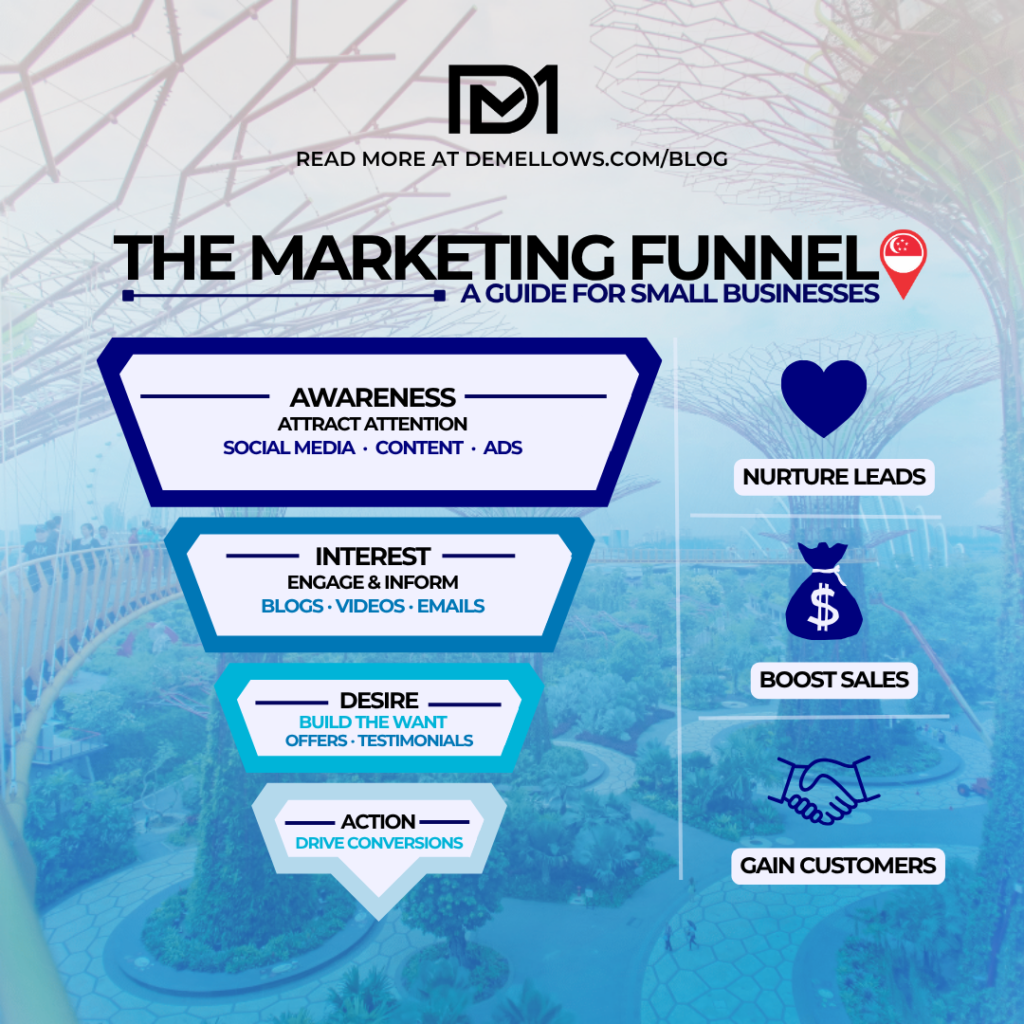
The marketing funnel is a model that represents the path a customer takes from first discovering your business to making a purchase and beyond. The funnel metaphor works because businesses start with a large audience at the top and gradually narrow down to the customers who actually buy.
Traditionally, the funnel has four main stages:
- Awareness – People discover your business
- Interest – Potential customers learn more about your products or services
- Desire – They develop a preference for your brand
- Action – They make a purchase
Some modern marketers also include post-purchase stages like retention and advocacy to keep customers coming back and turning them into brand advocates.
Stage 1: Awareness

Awareness is about getting your brand noticed. At this stage, potential customers may not even know your business exists.
How Small Businesses Can Build Awareness in Singapore:
- Social media: Platforms like Instagram, Facebook, and TikTok are ideal for reaching local audiences
- SEO and Google My Business: Help customers find your business online when they search for related services
- Collaborations: Partner with local influencers or community pages to expand reach
- Events and pop-ups: Showcase your products in malls, hawker centres, or neighbourhood events
At this stage, your goal is to introduce your brand without being pushy. Focus on educating and entertaining, not selling.
Stage 2: Interest

Once people know about your business, you need to capture their interest. This is where potential customers start considering whether your product or service could solve their problem.
Tips to Generate Interest:
- Content marketing: Blog posts, guides, videos, and social media content that answer questions or solve problems
- Email newsletters: Offer helpful tips or updates about new products
- Remarketing campaigns: Show ads to people who have previously visited your website or social pages
For example, a Singapore-based home bakery could share behind-the-scenes videos of baking, recipes, or tips for celebrating special occasions. This builds trust and keeps the audience engaged.
Stage 3: Desire

At the desire stage, customers are actively considering your business and comparing it to alternatives. Your goal here is to position your brand as the best choice.
Ways to Build Desire:
- Social proof: Share customer reviews, testimonials, or case studies
- Product demos: Offer samples or free trials if possible
- Promotions and offers: Highlight limited-time deals or special bundles
- Storytelling: Show how your product improves your customer’s life
A local fitness studio, for example, could share success stories of clients who achieved results using their programs. This creates emotional appeal and builds desire.
Stage 4: Action

The action stage is where a potential customer makes a purchase or takes another conversion step.
How Small Businesses Can Encourage Action:
- Clear calls to action (CTA): Make it obvious what you want them to do, like “Buy Now” or “Book a Class”
- Simplify the process: Ensure checkout, booking, or sign-up flows are easy
- Provide reassurance: Highlight guarantees, return policies, or free shipping
For instance, an online shop in Singapore could offer fast delivery and easy payment options, reducing friction and increasing conversions.
Stage 5: Retention and Advocacy

A modern marketing funnel does not end at the purchase. Retaining customers and turning them into advocates is critical for small businesses with tight budgets.
Strategies for Retention and Advocacy
- Email updates: Share exclusive deals, new products, or loyalty programs
- Engagement on social media: Respond to comments, feature customers, or run contests
- Referral programs: Encourage satisfied customers to bring friends or family
Satisfied customers not only return but also become brand ambassadors, helping your business grow organically in Singapore’s connected communities.
Why Small Businesses Should Use the Marketing Funnel
- Clarity: Understand where your potential customers are and what they need
- Efficiency: Allocate marketing resources where they have the most impact
- Better results: Tailored content and campaigns at each stage increase conversions
- Customer loyalty: Focus on retention and advocacy to reduce dependency on constant new leads
By mapping your marketing activities to the funnel, small businesses can make smarter decisions and achieve better results without overextending their budget.
Conclusion

The marketing funnel is a simple but powerful tool for small businesses in Singapore. By guiding customers through the stages of awareness, interest, desire, action, and retention, you can create marketing that is targeted, effective, and measurable.
Start by understanding your audience and creating content that meets their needs at each stage. Track your results and adjust strategies accordingly. With a clear marketing funnel, your small business can not only attract more customers but also retain them and turn them into loyal advocates.
💡 Pro Tip: Begin with one funnel stage at a time. Focus on building awareness and interest first, then refine strategies for desire, action, and retention. Over time, your marketing efforts will become more structured, measurable, and successful.